Soft & bloomy
Velvety, buttery and gently mushroomy, with a white edible rind and a centre that becomes softer as it ripens.
Look for: Brie, CamembertThe French cheese edit
From cloud-soft Brie to nutty Comté, meet the classics that make an everyday table feel like a little trip to France.
Start here
French cheese can look like a world of its own, but choosing well is simple: think about texture, strength and the moment you are planning. A creamy wedge for spreading, something firm for slicing and one bold flavour will take you a very long way.
Find your favourite
Use these personalities as your shortcut at the counter. The rind, texture and aroma will tell you almost everything you need to know.
Velvety, buttery and gently mushroomy, with a white edible rind and a centre that becomes softer as it ripens.
Look for: Brie, CamembertBig on aroma yet often mellow and savoury inside. Their rosy rinds bring depth to a simple board.
Look for: Reblochon, MunsterSalty, tangy and beautifully creamy or crumbly. A little goes a long way, especially beside something sweet.
Look for: Roquefort, Bleu d’AuvergneSliceable cheeses with toasty, fruity flavours that deepen with age. Friendly, versatile and easy to share.
Look for: Comté, MimoletteA beautiful board, made easy
Keep the extras quiet and let each cheese have its moment. No specialist equipment or complicated styling required.
Start with one soft, one firm and one blue or washed-rind cheese for contrast.
Bring cheese out 30–45 minutes before serving so its aroma and texture can open up.
Fresh bread, a crisp fruit and a small handful of nuts are more than enough.
Separate utensils keep delicate flavours distinct and make sharing feel effortless.
Pair without fuss
Match intensity with intensity, then add contrast. Acid wakes up rich cheese; sweetness rounds off salt.
Cook with French cheese

Baked & comforting
Layer tender potatoes and sweet onions beneath a generous Reblochon top, then bake until bubbling and deeply golden. Add a crisp green salad and let the oven do the rest.
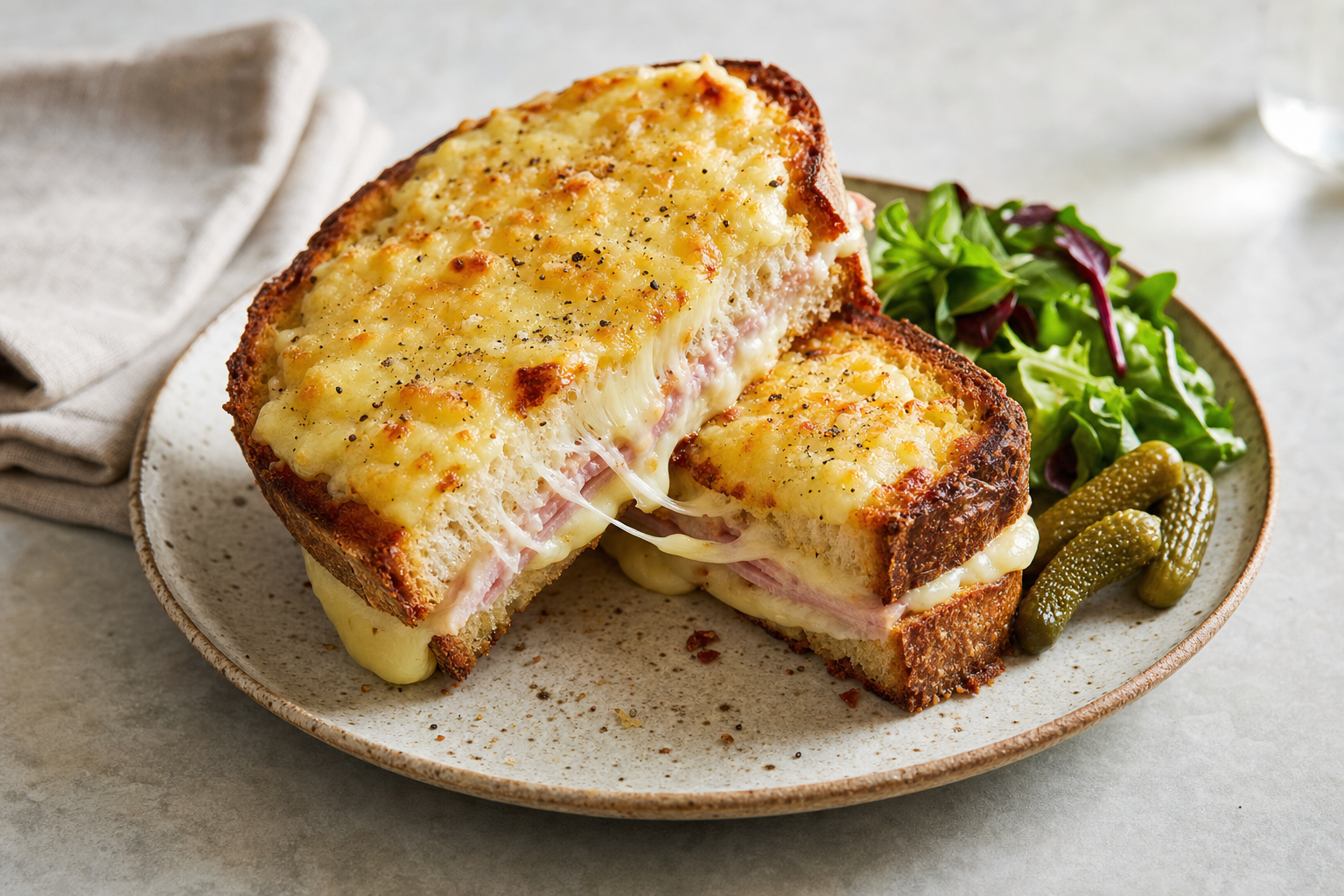
Crisp & golden
Turn a toasted sandwich into a proper meal with nutty Comté, a little béchamel and a burnished top. Cornichons on the side cut through every gloriously cheesy bite.
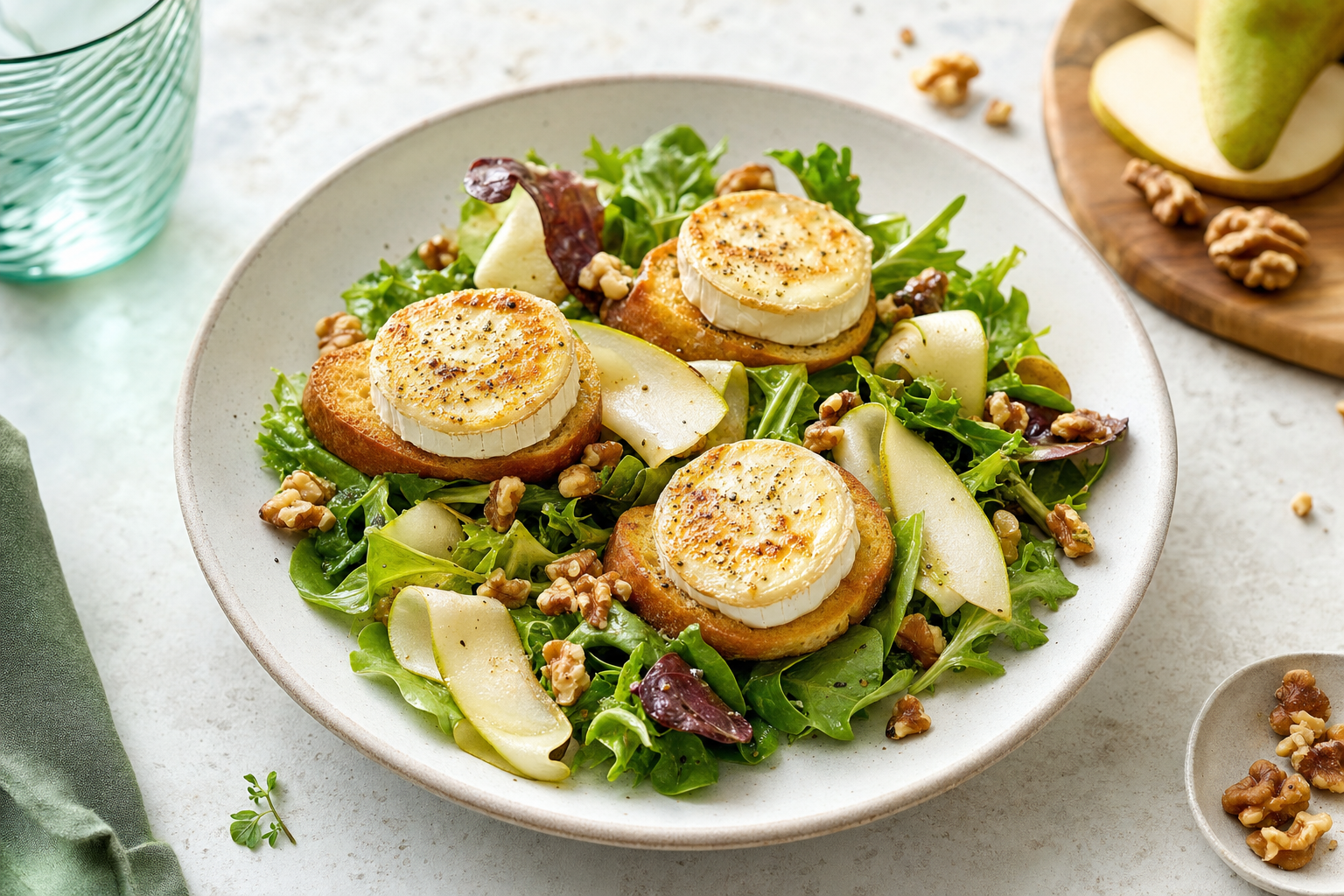
Fresh & tangy
Toast rounds of chèvre on baguette until soft at the centre, then set them over dressed leaves with pear and walnuts. It is light, bright and still thoroughly satisfying.
Keep it at its best
Cheese needs to breathe, but not dry out. Treat the cut surface gently and the next serving will taste just as good.
Cheese paper or baking paper lets the cheese breathe while protecting the cut face.
Keep it away from the coldest back wall and from strongly scented foods.
A quick note on the wrapping makes it easy to enjoy softer cheeses first.
Good to know
Most soft white and washed rinds are intended to be eaten and add flavour. Skip wax, cloth and very hard natural rinds; if in doubt, ask at the counter.
For a tasting board, allow roughly 60–90g per person. If cheese is the main event, plan a little more and add plenty of bread and fruit.
It continues to ripen as it rests. A younger cheese feels firmer and tastes milder; a riper one becomes softer, fuller and more aromatic.
Begin with milder, creamy or nutty styles and serve small pieces with familiar fruit or bread. Let curiosity do the rest.
Choose a texture you already love, add one new flavour, and make the board your own. There is no perfect combination—only the one everyone wants another bite of.